
Electric cars are no longer a niche hobby — they’re shaping the next decade of driving. The 2025 Hyundai Ioniq 5 keeps popping up in car reviews and buyer lists for good reason: it blends distinctive design, real-world range, and useful gadgets into a package that appeals to both gearheads and commuters. This (2025 Hyundai Ioniq 5) review digs into performance, parts and aftermarket potential, tech, comfort, and how the Ioniq 5 stacks up against rivals — with a clear verdict at the end.
Performance
The Ioniq 5 rides on Hyundai’s E-GMP platform, designed for EV efficiency and flexibility. Depending on trim you’ll find:
- Power: roughly 225 hp (RWD base) to about 320 hp (AWD/dual motor).
- 0–60 mph: mid-5-second territory for the sportier AWD model, high-6s for base RWD.
- Range: approximately 220–303 miles depending on battery and drivetrain.
- Charging: 800-volt architecture allows ultra-fast DC charging — typically 10–80% in ~18–20 minutes at high-power stations.
On the road the Ioniq 5 feels composed and surprisingly engaging for a crossover-sized EV. Steering has a directness enthusiasts appreciate, and the suspension balances comfort with composure. It’s not a sports car, but it’s fun enough for canyon runs and daily highway cruising.
Design & Comfort
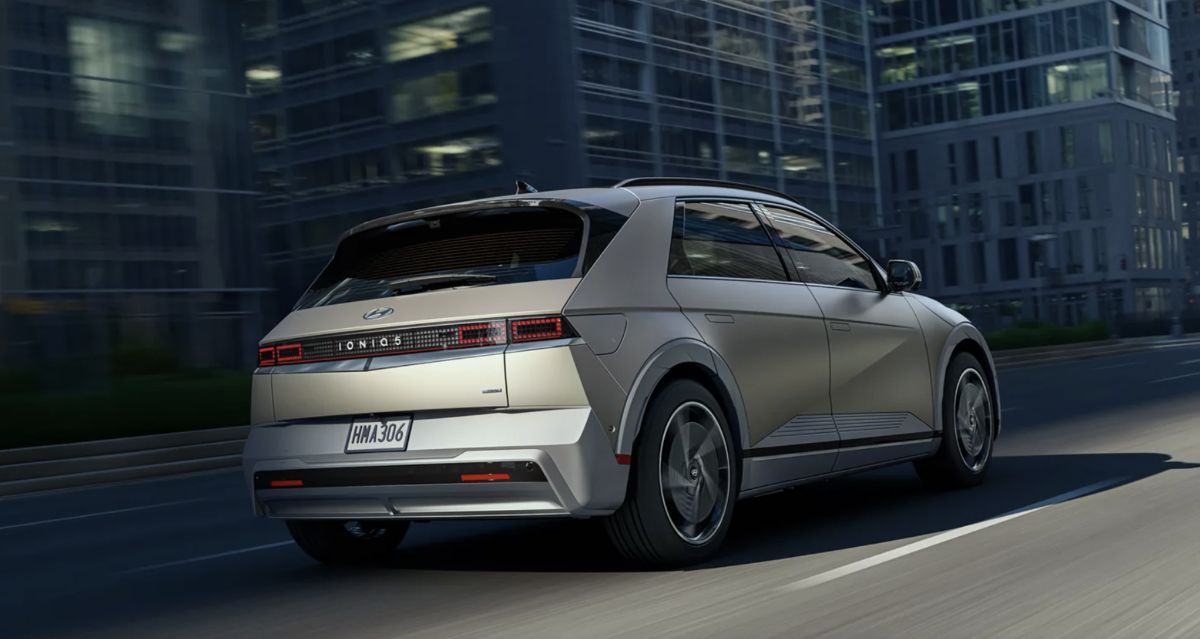
The Ioniq 5’s exterior is refreshingly bold — angular, pixelated lighting elements and a hatchback-like silhouette that stands out in a sea of bland SUVs. Inside, Hyundai leans into minimalism with a lounge-like cabin that uses sustainable materials without feeling cheap.
- Front seats: spacious and supportive for long drives.
- Cargo: large rear hatch and flat floor thanks to the skateboard battery layout.
- Comfort features: heated/ventilated seats, panoramic roof in higher trims, and a configurable center console.
Technology & Gadgets
If you love car gadgets, the Ioniq 5 delivers practical tech rather than gimmicks. Highlights include:
- Dual 12-inch displays for instrument cluster and infotainment.
- High-quality Bose audio on upper trims.
- Vehicle-to-Load (V2L) functionality — power a campsite fridge, tools, or charge a laptop from the car.
- Advanced driver-assist suite (Hyundai SmartSense) with adaptive cruise, lane-keep, and semi-autonomous features.
Infotainment menus are intuitive, and Apple CarPlay/Android Auto are standard. For gearheads, the clean electrical architecture makes it easier to add aftermarket gadgets like performance dataloggers, upgraded lighting, or accessory battery systems.
Safety
Hyundai packs the Ioniq 5 with modern safety hardware: multiple airbags, advanced collision-mitigation systems, blind-spot assist, and pedestrian detection. Expect top scores in crash testing for 2025 model-year assessments, and a comprehensive warranty that gives peace of mind.
Price & Value
Pricing sits in a competitive slice of the EV market. Expect a starting MSRP in the low-to-mid $40k range for base trims, with fully loaded AWD models pushing into the low $60k territory. That positions the Ioniq 5 between mainstream EVs and premium entries — strong value considering the tech, fast charging capability, and interior space.
Comparisons: Pros & Cons vs. Similar Models
How does the Ioniq 5 fare against peers like the Tesla Model Y, Kia EV6, and Ford Mustang Mach-E?
- vs. Tesla Model Y — Pro: more premium interior feel and better build consistency; Con: Tesla still leads in charging network and sometimes range.
- vs. Kia EV6 — Pro: Ioniq 5 is roomier and more comfort-focused; Con: EV6 often feels sportier and more engaging at the limit.
- vs. Ford Mustang Mach-E — Pro: Ioniq 5 is often better value and more feature-rich at similar prices; Con: Mach-E has a stronger performance halo for driving enthusiasts.
Insider Perspective: Enthusiasts vs. Everyday Drivers
Enthusiasts will appreciate the Ioniq 5’s platform potential: aftermarket suspension kits, bigger wheel and tire setups, and tuning for dual-motor variants are already showing up in online communities. The car’s 800V system and V2L are also playgrounds for creative mods (portable power setups, audio upgrades, custom lighting).
Everyday drivers will notice the practical wins: roomy interior, fast charging that cuts long-road recharge stops, predictable handling, and a user-friendly infotainment system. Range and charging access are the real-world metrics that influence daily satisfaction more than lap times.
Industry Angle: Where the Ioniq 5 Fits into Bigger Trends
The Ioniq 5 is emblematic of several industry trends:
- Platform sharing and modular EV architectures that lower costs and speed development.
- The shift from raw range competition to holistic value — charging speed, comfort, and tech matter as much as EPA numbers.
- Growing aftermarket ecosystem for EV parts and gadgets — from suspension to power accessories — showing that electrification isn’t killing enthusiast culture; it’s evolving it.
As the market chases the best cars 2025 lists, models that blend practicality, tech, and an emotional design — like the Ioniq 5 — will continue to stand out.
Pro Tip / Did you know?
- Pro tip: Use the Ioniq 5’s regenerative braking one-pedal mode in city driving to maximize range and reduce brake wear — it also makes stop-and-go traffic less tiring.
- Did you know? The Ioniq 5’s V2L outlet can supply up to 3.6 kW of AC power, which is enough to run many household appliances or even act as an emergency backup for a small fridge.
Verdict
The 2025 Hyundai Ioniq 5 remains one of the most compelling electric cars you can buy. It balances performance, comfort, and a long list of practical gadgets while staying priced competitively. Enthusiasts will love the platform’s mod potential and driving manners; everyday drivers will appreciate the space, fast charging, and user-friendly tech. If you’re shopping EVs this year and want a car that feels modern without the premium markup or polarizing design cues, put the Ioniq 5 high on your test-drive list.